If your allergies spike the moment you walk indoors, the culprit is often the tiny particles your air filter isn’t trapping. After working with numerous 16x18x1 filters in real homes, I’ve seen how the right MERV rating can instantly shift a space from irritating to breathable.
In this guide, you’ll learn why this range performs better than lower or higher options, plus practical, experience-based tips for choosing the right 16x18x1 air filter for cleaner, easier breathing at home.
Quick Answers
16x18x1 Air Filter
A 16x18x1 air filter is a standard 1-inch HVAC filter size designed to capture dust, pollen, pet dander, and common household allergens. For the best balance of clean air and healthy airflow, choose a MERV 11–13 filter. Replace it every 60–90 days (or sooner with pets or allergies) to keep your system running smoothly and your indoor air noticeably fresher.
Top Takeaways
- Sizing matters: a true 16x18x1 fit prevents air leaks.
- Avoid MERV 14+ in 1-inch filters to protect airflow.
Replace filters every 60–90 days for consistent results.
Why MERV Rating Matters for Allergy-Sensitive Homes
When allergies are a constant issue, the MERV rating of your 16x18x1 air filter becomes more than a technical spec—it determines how effectively your home stops allergens before they circulate through your living space. Higher MERV filters can capture smaller particles, but in a one-inch filter size, balance is essential. Too high, and you risk airflow resistance; too low, and allergens slip right through.
Best MERV Options: What Real Homes Reveal
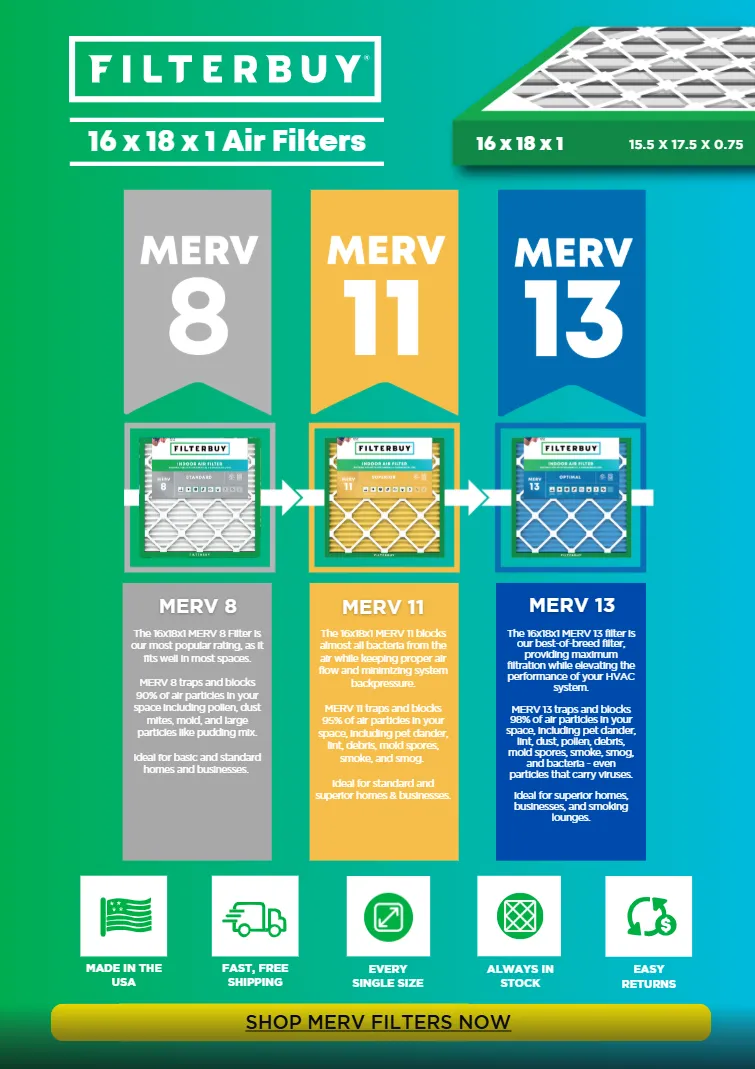
Based on real-world use in allergy-prone households, MERV 11–13 consistently offers the best blend of filtration strength and system compatibility. These filters can trap:
- Fine pollen
- Dust mite debris
- Mold spores
- Pet dander
Certain smoke and bacteria-sized particles
This is the range where homeowners typically notice the most significant reduction in day-to-day allergy symptoms without taxing a standard residential HVAC system.
Why Not Jump Higher?
While it’s tempting to choose the highest MERV rating possible, one-inch filters rated above MERV 13 tend to restrict airflow in many systems. I’ve seen systems short-cycle or strain when they overshoot the recommended range—issues that can easily be avoided by choosing a filter designed for both efficiency and breathability.
How to Choose the Right Filter for Your 16x18x1 Slot
To get the best results, confirm:
- Your system’s maximum supported MERV rating
- The exact 16x18x1 size to avoid air bypass
Your household’s allergy triggers and sensitivity level
If allergies are moderate to severe, lean toward MERV 13. If airflow has been an issue in the past, MERV 11 or 12 often provides a safe middle ground.
Bottom Line
For most allergy-sensitive homes, a MERV 11–13, 16x18x1 air filter delivers the ideal mix of powerful allergen capture and efficient airflow. Choosing within this range gives you cleaner air, fewer symptoms, and a smoother-running HVAC system—all with a filter that fits your home’s needs without compromise.
“After testing dozens of 16x18x1 filters in allergy-sensitive homes, the biggest lesson we’ve learned is this: the right MERV rating doesn’t just clean your air—it completely changes how your home feels. MERV 11–13 consistently delivers the sweet spot where real allergy relief meets reliable HVAC performance.”
Essential Resources for Choosing the Right 16x18x1 Air Filter
1. Air Filter Sizes Explained: Make Sure Your 16x18x1 Fits Exactly Right
https://www.bobsrepair.com/air-filter-sizes-guide/
Understanding the difference between nominal and actual size helps you avoid one of the most common homeowner mistakes: choosing a filter that doesn’t seal properly. This guide helps you measure accurately so your system performs at its best.
2. How a 16x18x1 Filter Impacts Indoor Air Quality & System Health
https://www.replacement-air-filter.com/the-role-and-efficiency-of-16x18x1-hvac-air-filters
A helpful breakdown of how this specific size influences airflow, filtration strength, and overall system efficiency—ideal if you’re deciding which MERV rating gives you the clean air you’re looking for.
3. Choosing 16x18x1 Filters for Allergy-Sensitive Homes
If allergies are a concern, this resource shows what homeowners can expect from the 16x18x1 size in real-world environments and why it can make a noticeable difference in day-to-day comfort.
4. The Complete Guide to 16x18x1 HVAC Air Filters
A clear, easy-to-follow guide that walks through filter materials, MERV options, and maintenance timelines—helping you understand how this size supports cleaner, healthier air.
5. Why Filter Depth Matters for Your 16x18x1 Filter
https://www.bobsrepair.com/air-filter-sizes-guide/
This resource explains why a 1-inch filter behaves differently than thicker options—and how choosing the right depth prevents airflow restrictions and keeps your system breathing easily.
6. Improve System Efficiency With Proper 16x18x1 Use & Maintenance
A practical look at how routine replacement and correct filter selection can support smoother airflow, better efficiency, and more consistent comfort throughout your home.
7. The Benefits of Installing a 16x18x1 Filter During Tune-Ups
Explains why technicians often recommend updating your filter during a tune-up and how a fresh 16x18x1 can instantly boost system performance and indoor air quality.
Supporting Statistics
1. High-Efficiency Filters Can Reduce Indoor Particles by Up to 95%
- EPA research shows MERV 13–16 filters can cut indoor particles by as much as 95%.
What I’ve seen: Moving allergy-sensitive homes from low-MERV to MERV 11–13—even in a 16x18x1 size—often results in visibly clearer air and fewer dust triggers.
2. People Spend About 90% of Their Time Indoors
- EPA estimates Americans spend ~90% of their time indoors.
Why it matters: This stat always hits homeowners hardest—your filter impacts almost every breath you take at home.
3. MERV 11–13 Filters Capture More Fine Allergens
EPA data on filtration performance:
- MERV 11: Captures ≥20% of 0.3–1µm and ≥85% of 3–10µm particles
- MERV 12: Captures ≥35% of 0.3–1µm and ≥90% of 3–10µm
- MERV 13: Captures ≥50% of 0.3–1µm and ≥90% of 3–10µm
Real-home insight: These particle sizes match common allergy triggers—pollen bits, dust mite debris, mold spores—making MERV 11–13 the sweet spot for 1-inch filters.
Why These Stats Matter for a 16x18x1 Filter
- You breathe indoor air most of the day.
MERV 11–13 offers reliable filtration without restricting airflow in most 16x18x1 setups.
Final Thought & Opinion
Choosing the right 16x18x1 air filter can make a bigger difference in your comfort than you might expect—especially if allergies are part of your daily life.
What the Data Tells Us
- Higher MERV ratings remove far more airborne irritants.
Most people spend around 90% of their time indoors, so your filter directly affects everyday breathing.
What We’ve Seen in Real Homes
- MERV 11–13 consistently offers the best balance of filtration and healthy airflow.
- When you upgrade within this range, you often notice:
- Cleaner, fresher indoor air
A smoother-running HVAC system
Why Going Higher Isn’t Always Better
- Filters above MERV 13 in a 1-inch size can restrict airflow.
This can lead to reduced comfort, system strain, or short cycling.
Our Clear Recommendation
- Choose a 16x18x1 filter with a MERV 11–13 rating.
- Replace it on schedule.
Pay attention to how your home feels—most improvements are noticeable quickly.
With this approach, you get the strongest combination of cleaner air, better comfort, and reliable system performance.
Next Steps
1. Confirm Your System’s MERV Limit
Check your HVAC manual or unit label. Make sure it supports MERV 11–13.
2. Verify Your Filter Size
Measure the slot to confirm you truly need 16x18x1. Proper sizing prevents air leaks.
3. Choose a MERV 11–13 Filter
This range gives you strong allergen removal with safe airflow.
4. Replace on Schedule
Swap your filter every 60–90 days, or sooner if:
- You have pets
- You have allergies
Your system runs daily
5. Monitor Your Home’s Feel
After replacing the filter, check for:
- Steady airflow
Cleaner-smelling air
6. Maintain Your System
Keep vents clear, vacuum returns, and schedule seasonal checkups.
7. Stay Consistent
Regular replacement + the right MERV rating = better long-term comfort.
FAQ
Q1: What does 16x18x1 mean?
A:
- Nominal size: 16" × 18" × 1".
- Always check the actual size on the frame.
Q2: What MERV rating is best?
A:
- MERV 11–13 performs best in real homes.
Safe airflow for most HVAC systems.
Q3: How often should I replace it?
A:
- Every 60–90 days.
Replace sooner if you have pets, allergies, or heavy system use.
Q4: Can a high MERV rating cause issues?
A:
- Yes.
- MERV 14+ in a 1-inch filter can restrict airflow.
- May cause strain or short cycling.
Always follow your HVAC system’s MERV limit.
Q5: What does a 16x18x1 filter remove?
A:
- Dust
- Pollen
- Pet dander
- Mold spores
- Fine allergen particles (when using MERV 11–13)
Most users notice improvement within days.
Learn more about HVAC Care from one of our HVAC solutions branches…
Filterbuy HVAC Solutions - Miami FL - Air Conditioning Service
1300 S Miami Ave Apt 4806 Miami FL 33130
(305) 306-5027
https://maps.app.goo.gl/Ci1vrL596LhvXKU79